
Secondary glazing can reduce noise better than double glazing in many Brisbane homes, commercial buildings, and warehouse spaces because it creates a larger insulating air gap that blocks sound more effectively. Tired of noisy neighbours and sleepless nights? Still waking up at 3 AM to outside noise? Many homeowners assume replacing windows and doors is the only answer, yet the reality is that how glazing handles sound matters far more than whether the windows and doors are new.
This article explains, in clear and practical terms, how secondary glazing performs against double glazing, why certain types of noise expose the limits of double glazed systems, and when secondary glazing becomes the smarter, more cost effective solution for quieter, more comfortable homes in Brisbane.
If you are ready to improve acoustic comfort without replacing your existing windows and doors, Winsulation makes it easy to get started – contact our team today to get a tailored acoustic solution designed for your home, commercial property, or warehouse. Our expert installation process delivers high-performance insulation for windows and doors, helping you get measurable acoustic results with minimal disruption.
Whether you need residential upgrades or large-scale warehouse projects, we help you get the right insulation through precise installation, quality materials, and proven acoustic performance. Contact Winsulation now to get a fast quote, discuss acoustic options for glass windows and doors, and book professional installation that delivers long-term insulation value.
How the Larger Air Gap in Secondary Glazing Blocks More Sound
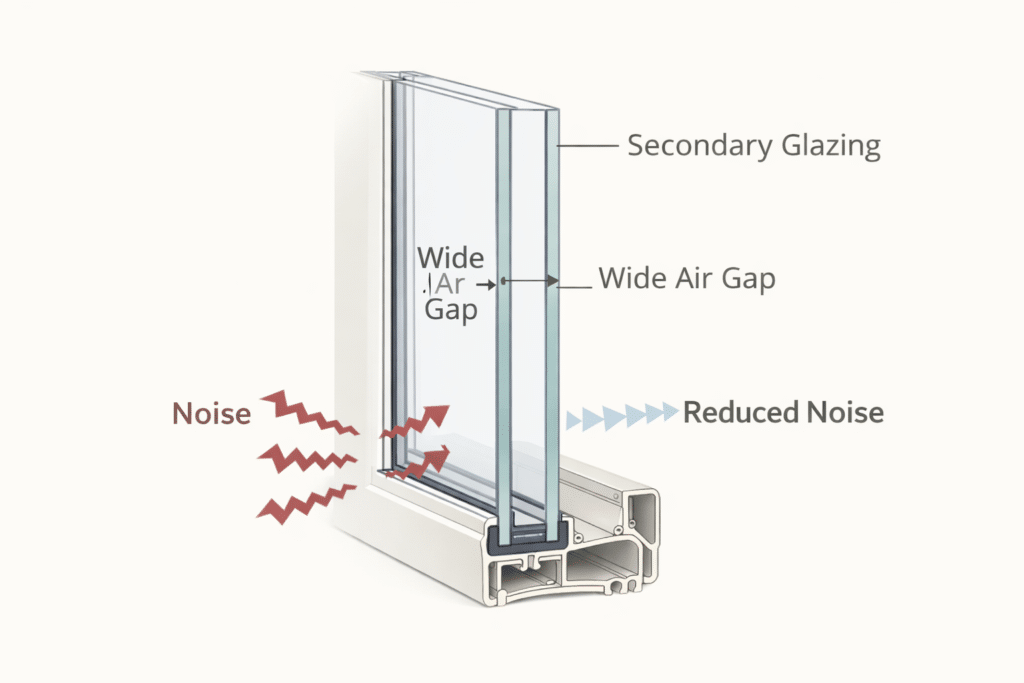
Sound travels through vibration. Glass vibrates, frames vibrate, and air carries that vibration from outside to inside. To reduce exterior racket properly, a glazing system needs separation, airtight seals, and mass working together.
Secondary glazing is installed inside the existing frame of glass windows and doors, forming a second glazed layer with a much wider insulating air gap than most double glazed units. This gap is the key reason it performs so well acoustically.
Standard double glazed windows and doors usually have a narrow cavity between the panes. That space is designed primarily for thermal efficiency, not maximum acoustic performance. Secondary glazing, by contrast, can introduce a significantly wider pocket of still air. The wider the air space is, the harder it becomes for sound energy to cross it.
This design is particularly effective when combined with laminated glass. Laminated glass dampens vibration, while the air cavity disrupts sound waves. Together, they create a system that reduces noise transfer far more effectively than a narrow cavity alone.
For homes, businesses, and warehouse spaces near busy roads, schools, flight paths, or commercial zones, this difference becomes noticeable immediately. Interior spaces feel calmer, background noise drops, and unwanted sound loses its sharpness and intensity.
Secondary Glazing vs. Double Glazing: Noise Reduction Compared in Decibels
Noise reduction is measured in decibels. The scale is not linear. A small numerical change can feel like a major difference to the human ear.
The table below shows typical performance ranges seen in residential glazing applications. Actual results vary depending on installation quality, glass type, seals, and the condition of existing windows and doors.
Glazing type | Typical noise reduction range |
Single glazed windows | 0 to 10 dB |
Standard double glazing | 20 to 30 dB |
Secondary glazing with wide air gap | 35 to 45 dB |
The jump from double glazing to secondary glazing may look modest on paper, yet perceptually it can mean the difference between intrusive noise and background sound that fades into the environment.
This is why homeowners who are actively seeking a solution for outside racket often find that secondary glazing delivers a better outcome without full window replacement.
Understanding the measured differences between double glazing and secondary glazing systems is only useful if it leads to the right decision for your property. If your existing windows and doors are falling short, Winsulation can help you assess whether added insulation is the most effective next step.
Our team works across residential projects and large warehouse environments, providing practical guidance, accurate assessments, and solutions designed around your windows rather than unnecessary replacement. Take the next step and contact Winsulation, request a detailed quote, and discuss insulation options that suit your space, budget, and goals.
Why Traffic and Low Frequency Noise Reveal the Limits of Double Glazing

Not all noise behaves the same way. High frequency sounds, such as voices and birds, are relatively easy to block. Low frequency noise, such as traffic rumble, trucks, and aircraft, carries more energy and travels through materials more easily.
Double glazing struggles here because its insulating air gap is small. Once sound energy bridges that gap, the system reaches its limit. Thicker glass alone does not fully solve the issue.
Secondary glazing performs better because the air gap is larger and the system can use different glass thicknesses. This disrupts sound frequencies instead of letting them pass straight through windows and doors.
In practical terms, this means secondary glazing often performs better for:
- Traffic commotion from main roads and intersections
- Aircraft racket that carries over long distances
- Low frequency sound that penetrates brick and concrete
- Ongoing background racket rather than short, sharp sounds
Why Brisbane Homeowners Choose Winsulation
Winsulation is a Brisbane-based business specialising in secondary glazing and acoustic systems designed for Australian conditions. The focus is on performance, precision, and practical outcomes rather than unnecessary replacement.
All systems are professionally installed and tailored to suit homes, offices, and warehouse environments. The approach prioritises the reduction of external racket, thermal efficiency, and long-term value while retaining existing windows wherever possible.
This makes secondary glazing a trusted option for homeowners seeking a quieter, more comfortable interior without the hassle of full window replacement.
The Quiet Truth Most Window Replacements Miss
Secondary glazing can outperform double glazing for noise reduction when designed and installed correctly. The larger insulating air gap, combined with appropriate glass and sealing, allows it to block sound more effectively, particularly low frequency commotion common in Brisbane.
For homeowners who want better sleep, lower energy bills, and improved comfort without replacing their windows, secondary glazing offers a proven and cost-effective solution.
If you are exploring options and want clear guidance, a free quote and professional assessment can help determine the right approach for your home. Contact Winsulation today to start improving comfort, reducing commotion, and making your home quieter and more efficient.